





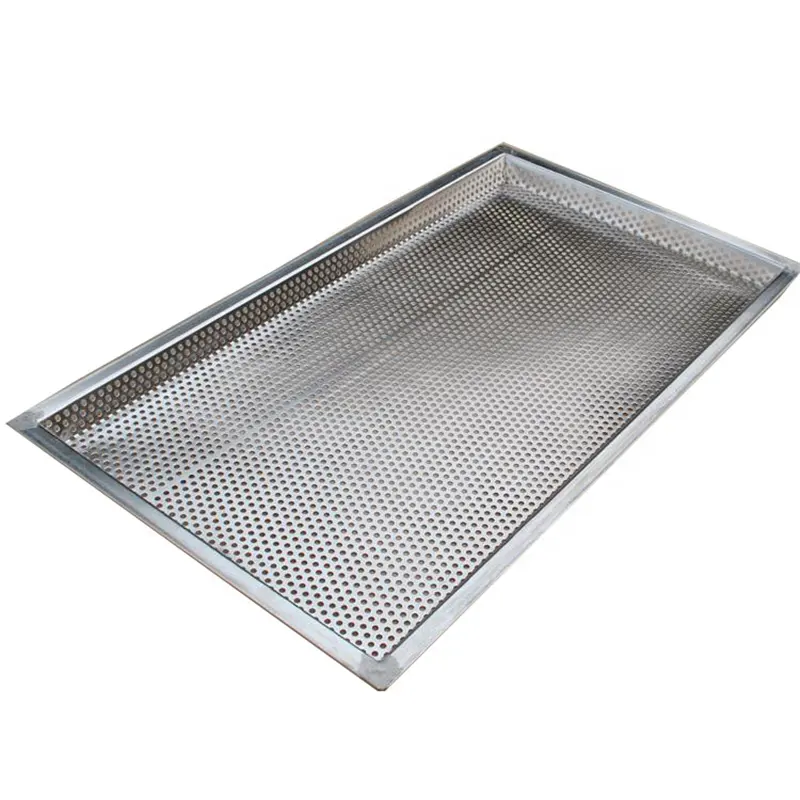
Wholesale Stainless Steel Baking Trays: A Comprehensive Sourcing Guide for Bulk Buyers
Why Bulk Buyers Must Prioritize Product Specification Consistency
When sourcing bulk bakery trays, consistency is king. Variations in dimensions, thickness, or hole patterns can disrupt your entire production line. For example, a 600x400 baking tray must match your rack or conveyor system precisely. Even a few millimeters of deviation can cause jams or uneven baking. Always request a detailed spec sheet from your stainless steel tray supplier and verify each batch against it. This includes checking length, width, edge height, and corner radius. Remember, a reliable supplier will have strict quality control to ensure every tray in your order matches your approved sample.
Material Certification: Ensuring Food-Grade and Durability
Stainless steel grades differ significantly in corrosion resistance and durability. For food-grade applications, 304 stainless steel is the industry standard, while 316L offers superior resistance to chlorides and acids. When buying commercial baking tray wholesale, always request material certificates (also known as EN 10204 3.1 or equivalent). These documents attest to the chemical composition and mechanical properties of the steel. Don't accept vague claims—verify that the certificates are traceable to the original mill. This is not just about compliance; it's about ensuring your trays won't warp, corrode, or leach harmful substances into food over time.
Surface Quality: What to Visually and Tactilely Inspect
Surface quality affects both hygiene and performance. Check for cracks, pits, scratches, or rough spots that can harbor bacteria. A mirror-finish isn't necessary for most bakery operations, but a consistent satin brush finish is ideal as it resists scratching and is easier to clean. Use a simple inspection method: run a clean white cloth over the tray surface; if it snags, the surface is too rough. Also, inspect the edges—they should be smoothly rolled or deburred to prevent injuries and ensure easy handling. Sample approval should include a physical check of these aspects.
Packaging and Stackability: Maximizing Efficiency and Safety
Proper packaging is critical for preventing damage during transit and ensuring safe storage. Professional suppliers use protective film, edge protectors, and sturdy cartons or wooden crates. More importantly, consider the stackability of your trays. Nestable designs save space but may require careful handling to avoid sticking if they have rolled edges. Flat-edge trays need interleaving paper to prevent scratching. During your quality inspection, test how the trays stack in your existing racks or trolleys. This will influence your storage layout and operational efficiency.
The Non-Negotiable Step: Sample Approval Before Bulk Orders
Never skip a pre-production sample. Ask your supplier for a sample that exactly matches your specifications, including hole pattern, if any. For instance, if you need perforated trays for air circulation, the hole diameter and spacing must be precisely as requested. Test the sample in your own oven or production line. Check dimensional tolerance, flatness, and how it handles thermal expansion. A reputed supplier will often charge a nominal fee for samples but deduct it from your first bulk order. This step can save you thousands of dollars in costly mistakes.
Quality Inspection: Inbound Checks and Batch-To-Batch Consistency
Even with a trusted supplier, implement a quality inspection protocol for every received shipment. Use a sampling plan (e.g., ISO 2859) to randomly check specimens against your approved sample. Measure dimensions, verify gauge thickness, and conduct a simple visual check for defects. Also, monitor weight as a quick indicator—a lighter tray might indicate thinner material. Over time, track these data to assess your supplier's consistency. Any drift should be addressed immediately with documentation, photos, and a formal complaint if necessary.
Ensuring Long-Term Replenishment Stability
Long-term replenishment stability is a top concern for wholesalers. You need a supplier who can maintain production quality and delivery schedules over years, not just one-off orders. Evaluate their production capacity, inventory of raw materials, and their ability to handle sudden demand spikes. Ask about their lead times and their policy for rush orders. It's wise to establish a rolling forecast with your supplier and commit to minimum order quantities (MOQs) that align with both your cash flow and their production efficiency. Diversifying your supplier base might also mitigate risks, but always balance with the complexity of maintaining multiple specifications.
Comprehensive Wholesale Purchasing Checklist
Before placing a bulk order, ensure you have the following documented:
- Detailed technical drawings with dimensions, thickness, hole pattern (if any), and edge style
- Material certificate for every batch
- Approved sample signed by both parties
- Packaging specification to prevent damage
- Quality inspection plan (AQL levels, test methods)
- Shipping terms (Incoterms) and delivery schedule
- After-sales support including warranty terms and defect replacement policy
Risk Alerts: Common Pitfalls to Avoid
Beware of suppliers offering prices significantly below market rates—they might compromise on material grade (e.g., using 201 instead of 304) or use thinner gauge than specified. Also, watch out for inconsistent batch quality where the first shipment is good but subsequent ones vary. Always protect your interests by having written contracts that stipulate penalties for late deliveries or non-conforming goods. Additionally, keep an eye on currency fluctuations and logistics costs, as they can erode your margins. Consider using a third-party inspection service for critical orders, especially when sourcing from overseas.
Frequently Asked Questions (FAQ)
The 600x400 baking tray is the most common standard used in commercial kitchens and bakeries, matching GN (Gastronorm) container dimensions. However, sizes can be customized to fit specific ovens or trolleys.
Yes, perforation is customizable. You can specify hole diameter, spacing, and pattern. Common hole sizes range from 1mm to 10mm, and the open area can be adjusted for your baking needs. Ensure the supplier uses clean punching to avoid burrs.
For most bakery environments, 304 stainless steel offers excellent corrosion resistance and is cost-effective. If your products involve high salt or acidic ingredients, or if you use harsh cleaning chemicals, 316L might be worth the extra cost. Discuss your specific conditions with your supplier to make an informed decision.
MOQs vary by manufacturer. Some may accept 200 pieces for standard sizes, while custom orders might require 1000 pieces or more. Always clarify MOQs and lead times early in your negotiations.
Request a pre-shipment inspection for every batch, or hire an independent third-party inspection service. Maintain open communication and build a long-term partnership based on mutual trust and clear expectations. Remember to document all deviations and address them immediately.
Meta Title and Description
Meta Title: Bulk Buyers Guide to Wholesale Stainless Steel Baking Trays - Quality, Sourcing, and More
Meta Description: Discover key factors for sourcing wholesale stainless steel baking trays: material certification, surface finish, stackability, and quality inspection. Learn how to ensure long-term supply stability.
Call-to-Action: Request a Quote
Ready to source reliable stainless steel tray suppliers? Send us your specifications for a detailed quotation. Our team will respond within 24 hours with pricing, lead time, and free sample options.1. What is the standard size for baking trays in the food industry?2. Can I get perforated baking trays for better air circulation?3. How do I choose between 304 and 316 stainless steel?4. What is the typical minimum order quantity (MOQ) for wholesale trays?5. How can I guarantee the supplier's product quality is consistent over time?